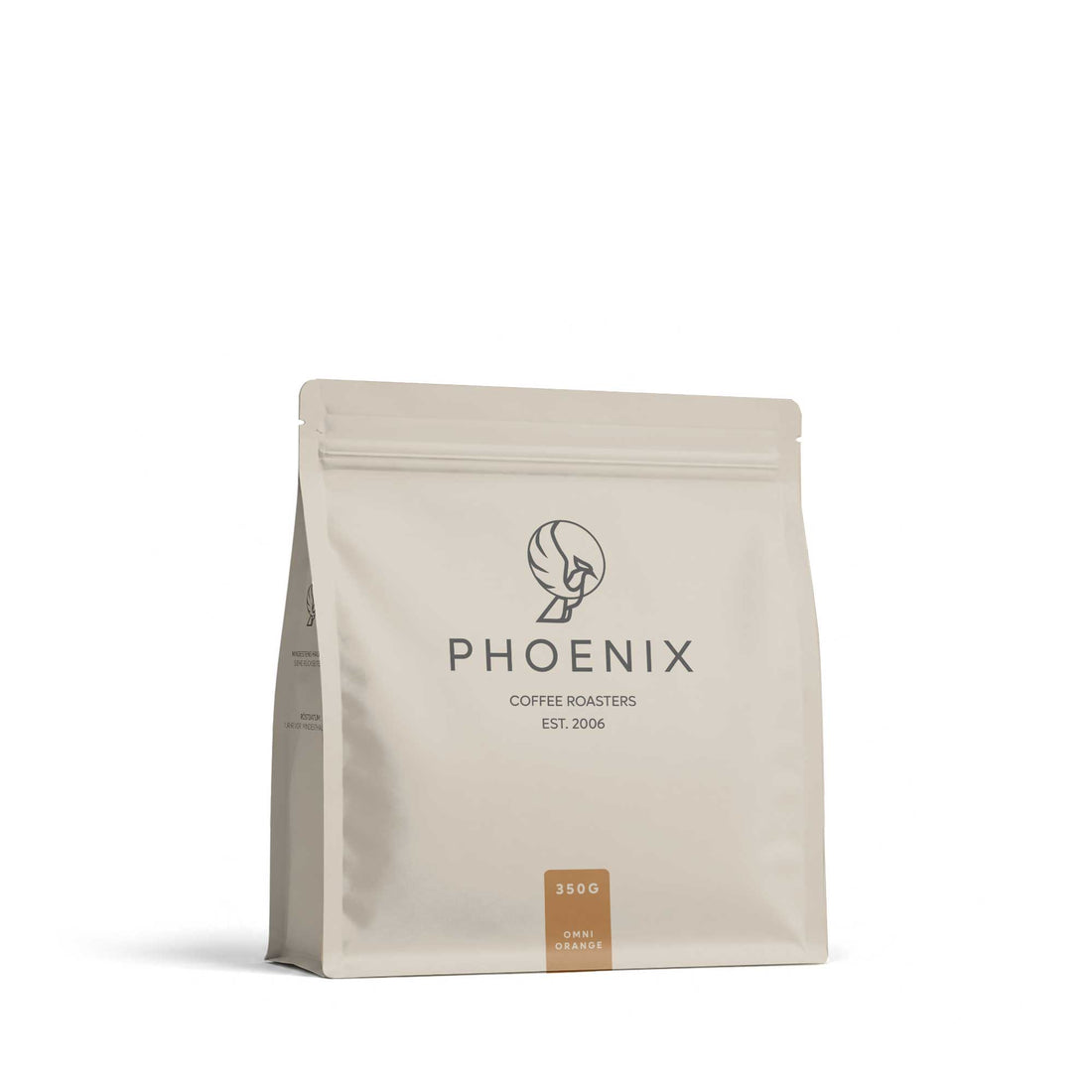


Rwanda is one of the most exciting origins for clean, structured, elegant, and fruit-forward coffees. Those interested in single origins from East Africa will often find cup profiles with delicate sweetness, lively acidity, and remarkable clarity. Our Omniroast ORANGE from Rwanda from the Muteteli Washing Station showcases exactly this side of the country: a washed Red Bourbon from Huye in the Southern Province, grown at elevations of approximately 1,700 to 2,200 meters.
In this portrait, we look at origin, variety, processing, and flavor. We also explain why specifications such as "Washed," "Bourbon," or "Grade A 15+" are more important for the cup than they may seem at first glance.
Why Rwanda is a special origin for specialty coffee
Rwanda is small in terms of land area, but extremely diverse in its coffee culture. The country is located in the heart of East Africa and is often described as the "land of a thousand hills." This topography is crucial for coffee: many growing areas are at high altitudes, the temperature differences between day and night promote a slow ripening of the coffee cherries, and the soils are nutrient-rich in many places.
For specialty coffee enthusiasts, Rwanda is particularly interesting because many coffees are very clear and precise. Washed lots in particular often show bright fruit, floral notes, and delicate sweetness. Those who try specialty coffee from Rwanda often experience an accessible but not boring cup: enough complexity for discerning palates, enough balance for beginners.
Compared to other origins from Africa, Rwanda also has its own profile. It can be reminiscent of Kenyan clarity, but often feels rounder and gentler. At the same time, it brings the elegance that many appreciate in washed East African coffees.
Muteteli: a coffee profile that showcases Rwanda's diversity
Muteteli is a Rwandan Bourbon coffee that impresses with its combination of high altitude, washed processing, and clear sorting. The raw coffee data shows: Bourbon variety, Washed processing, Grade A 15+ quality, Huye origin in the Southern Province. These specifications sound technical, but they describe quite accurately what to expect in the cup later.
In our Omniroast ORANGE, the Muteteli is roasted so that it can work in several preparation methods. In filter coffee, it shows its clarity and delicate fruit particularly clearly. As an espresso, depending on the recipe, it can develop an elegant sweetness and a precise acidity structure.
Focus on origin: Huye and the Southern Province
Huye is located in southern Rwanda and is one of the country's well-known coffee regions. The Southern Province offers different microclimates, high altitudes, and a landscape characterized by hills, fertile soils, and green regions. Huye Southern Province therefore often stands for clean, structured profiles with good balance.
The region is interesting for coffees that work not only through fruit, but also through texture and elegance. In our coffee, this is evident in a cup that feels precise without becoming sharp.
Altitude of 1,700 to 2,200 meters and its influence on the cup
Altitude is a key factor for quality and flavor. At 1,700 to 2,200 meters, coffee cherries ripen more slowly than at lower altitudes. This allows sugars, acids, and aromatic compounds to develop more distinctly. The result is often more complex coffees with a clear structure.
This altitude often means: bright fruit, elegant acidity, medium body, and a clean finish. This is ideal for filter coffee because the individual layers of aroma remain clearly perceptible.

Smallholder farmers, fertile soils, and dense forest regions
Rwanda's coffee production is heavily characterized by smaller growing areas. Many producers cultivate coffee in hilly landscapes, often in close proximity to other crops and dense vegetation. The soils in the region are fertile, and the forest regions influence the local microclimate.
These conditions are relevant for the cup because they can contribute to slowly ripening, aromatically pronounced coffee cherries. In combination with careful processing, this creates a profile that feels transparent and balanced.
Bourbon & Washed: What the coffee data means
With specialty coffee, it is worth taking a look at the raw coffee specifications. They help to set expectations for the cup. Muteteli brings three particularly important data points: Red Bourbon as the variety, Washed as the processing.
- Bourbon: a traditional Arabica variety with elegant sweetness.
- Washed: a processing method that emphasizes clarity and clean aromas.
Bourbon variety: elegant sweetness and clear structure
Red Bourbon is widely grown in Rwanda and is appreciated for its delicate sweetness, round structure, and aromatic elegance. Compared to very wild, experimental varieties, Red Bourbon often feels balanced and accessible. That is exactly why this variety is perfectly suited for coffees that appeal to both beginners and experienced coffee drinkers.
A good Red Bourbon from Rwanda can show notes of citrus, stone fruit, berries, honey, or delicate floral nuances. Not every coffee brings all these facets, but the variety provides a strong foundation for clear, sweet profiles.
Washed Process: clean aromas and precise cup profiles
Washed processing often stands for transparency. In the Washed Process, the fruit pulp of the coffee cherry is removed. The coffee is then fermented under controlled conditions, washed, and dried. This means that fermented fruit sweetness is less prominent, while terroir, variety, and ripeness are brought more to the forefront.
In the cup, this means: clear aromas, defined acidity, and a clean finish. Those who love filter coffee will often find a very good balance of fruit and structure in washed Rwandan coffees.
What does coffee from Rwanda taste like?
The taste of coffee from Rwanda is, of course, not uniform. Origin, harvest, processing, and roasting all play a role. However, clear, bright, and elegant profiles are typical. Many coffees show citrus notes, red fruit, tea-like lightness, floral accents, and a pleasant sweetness.
Those who have previously drunk mostly nutty or chocolatey coffees will often experience Rwandan coffee as more lively. This does not have to mean "sour." When roasted well and extracted properly, the acidity feels more like freshness: structured, juicy, and integrated.
Preparation recommendations for filter coffee, French press, and espresso
For filter coffee, we recommend a medium to slightly finer grind, fresh water, and a clean extraction. A starting point of 60 grams of coffee per liter of water works very well. For Pour Over, you can start with 15 grams of coffee to 250 grams of water and keep the brewing time between approximately 2:30 and 3:30 minutes, depending on the dripper.
For the AeroPress, a recipe with a slightly lower temperature, around 90 to 93 degrees Celsius, is worth trying to keep the fruit clear and avoid bitterness. For the French press, the grind can be coarser. A brewing time of four minutes plus a short resting period results in a round, texture-focused cup.
As an espresso, the ORANGE needs a little attention. For example, start with a brew ratio of 1:2.3 to 1:2.6 and an extraction time of 26 to 32 seconds. The goal is not maximum body, but balance: sweetness, freshness, and a clear finish.
__
When you try Muteteli, it is worth doing a small comparison: brew it once as a Pour Over and once in the AeroPress. This way, you can quickly see how much the recipe, grind, and contact time change the fruit, sweetness, and texture.