

A chocolatey espresso with a nutty aftertaste is for many the ideal vision of a classic espresso cup: full-bodied, sweet, rounded, and with low acidity. For this espresso cup profile to be reliably achieved, the roast, green coffee, and preparation must match. Good beans alone are not enough if the grind is too coarse or the extraction is too short. Conversely, even a very precisely adjusted portafilter cannot conjure up chocolate from an unsuitable roast.
This guide shows which factors are crucial for a nutty espresso, why a medium to medium-dark espresso roast level works so well, and how you can specifically achieve a rounder profile in your portafilter machine or super-automatic machine.
What does a chocolatey-nutty espresso taste like?
When an espresso tastes like chocolate, it rarely refers to actual sweetness like in a chocolate bar. It refers to associations with cocoa, dark chocolate, nougat, hazelnut, almond, caramel, or roasted nuts. This is accompanied by a dense body, a creamy texture, and a long, pleasant aftertaste.
A chocolatey-nutty profile usually stands for balance. The acidity is present but not sharp. The bitterness supports the cocoa impression but does not dominate. Sweetness, body, and roast aromas intertwine. Especially beginners often find such espressos more accessible than very light, fruit-forward roasts.
Typical sensory characteristics include:
- Cocoa, dark chocolate, or milk chocolate
- Hazelnut, almond, walnut, or nougat
- Caramel, brown sugar, or slight roast sweetness
- Creamy body and stable crema
- Moderate acidity and a clean, non-smoky finish
The right roast level: medium-dark for sweetness, body, and low acidity
To roast espresso beans to be chocolatey, an extremely dark roast level is usually not necessary. Often, a medium to medium-dark roast is ideal. It reduces perceived acidity, builds body, and develops roast aromas without completely overpowering the fine characteristics of the green coffee.
An espresso roast that is too light can quickly taste sour, thin, or edgy in the espresso, especially if it is not perfectly extracted. A roast that is too dark provides strong bitterness and plenty of roast aroma, but often loses sweetness and nuance. Then the espresso tastes more burnt, dry, or flat instead of like chocolate and nuts.
A medium-dark roast is therefore a good compromise: enough development for sweetness and body, but still enough clarity for a clean cup profile.
Why Maillard notes, caramelization, and development time are crucial
The chocolatey-nutty aromas do not arise by chance. During roasting, Maillard reactions occur: sugars and amino acids react with each other and form complex aroma compounds. These are reminiscent of bread crust, nuts, cocoa, or caramel.
The development time after the first crack also plays an important role. If the coffee is developed too briefly, it often remains bright, acidic, and not very sweet in the espresso. If it is developed too long, bitterness increases and the aromas become dull. Good espresso roasts focus precisely here: they develop sufficient depth without over-roasting the coffee.
The composition of the green coffee: Which origins promote the profile
When asking which beans work particularly well for espresso, one should not only look at the roast level. The origin, variety, processing, and density of the green coffee also shape the result. For chocolatey profiles, coffees with natural sweetness, moderate acidity, and good body are often suitable.
Brazilian Arabicas are classics for nuts, cocoa, and a soft texture. Central American coffees often bring caramel, milk chocolate, and a clear but not overly dominant acidity. Depending on the blend, a small proportion of high-quality Robusta or Canephora can additionally provide body, crema, and spice.

Brazil, Central America, and selected Robustas for nuts, cocoa, and crema
Brazil often stands for hazelnut, chocolate, low acidity, and round body. Coffees from Guatemala, Honduras, El Salvador, or Costa Rica can complement caramel, cocoa, and a delicate fruit acidity. This combination provides depth without making the profile too heavy.
Selected Robustas are not automatically inferior. In well-composed espresso blends, they can provide stable crema, dense body, and a more bitter cocoa note. Quality is crucial: Cleanly processed Robusta tastes strong and structured, not rubbery or earthy.
Chocolatey-nutty espresso in the portafilter: Recipe and adjustment screws
An espresso in a portafilter can be controlled very precisely. For a round, chocolatey profile, a classic starting recipe is useful: 18 grams of coffee grounds in the basket, about 36 grams of coffee in the cup, and an extraction time of 25 to 30 seconds. This corresponds to a brew ratio of 1:2.
This recipe is not law, but a starting point. If the espresso tastes sour and thin, extraction is usually lacking. If it tastes dry, bitter, and hollow, it was probably over-extracted or brewed too hot.
Grind size, brew ratio, temperature, and extraction time for more chocolate
For more chocolate and less acidity, small, systematic adjustments often help:
- Finer grind: extends contact time and increases extraction.
- Slightly shorter brew ratio: about 1:1.8 can emphasize more body and sweetness.
- Moderately increased temperature: 93 to 94 degrees can work for medium-dark roasts.
- Check extraction time: 26 to 32 seconds is a good range for many classic espressos.
It is important to change only one variable at a time. This way, you can identify which adjustment actually improves the taste.
Preparation in the super-automatic machine: How to make the profile rounder and less bitter
An espresso from a super-automatic machine can also taste chocolatey and nutty if the machine is set correctly. Super-automatic machines usually work with shorter contact times and smaller amounts of coffee grounds than portafilter machines. Therefore, it is particularly important not to choose too large a beverage volume.
Many bitter or watery results occur because an "espresso" is extracted with 50 or 60 milliliters. This can quickly taste thin and bitter. A shorter beverage volume is better to preserve the body.
Correctly setting grind size, coffee strength, brewing temperature, and beverage volume
For a chocolatey-nutty espresso from a super-automatic machine, these settings help:
- Grind size: rather fine, but only fine enough for the machine to extract cleanly.
- Coffee strength: choose high, so that enough coffee grounds are used.
- Brewing temperature: medium to high, depending on the machine and roast.
- Beverage volume: rather 25 to 35 milliliters instead of a large cup volume.
If you want your espresso to have low acidity, fresh but not too fresh beans are important. After roasting, espresso beans usually need to degas for several days to two weeks before they extract particularly stably.
Portafilter vs. super-automatic machine: Where does chocolatey-nutty espresso taste better?
In a portafilter, the desired cup profile can be worked out more precisely. Grind size, dose, distribution, tamping, brew ratio, and temperature can be individually adjusted. Those who want to experiment get more control and often more depth in the cup here.

The super-automatic machine scores with convenience and repeatability. It is less forgiving in bean selection, but can deliver very good everyday results with a suitable roast. For chocolatey-nutty profiles, classic espresso roasts are usually more suitable than very light filter roasts.
In short: The portafilter offers more potential, the super-automatic machine more convenience. In both cases, it is crucial that beans, roast level, and settings match.
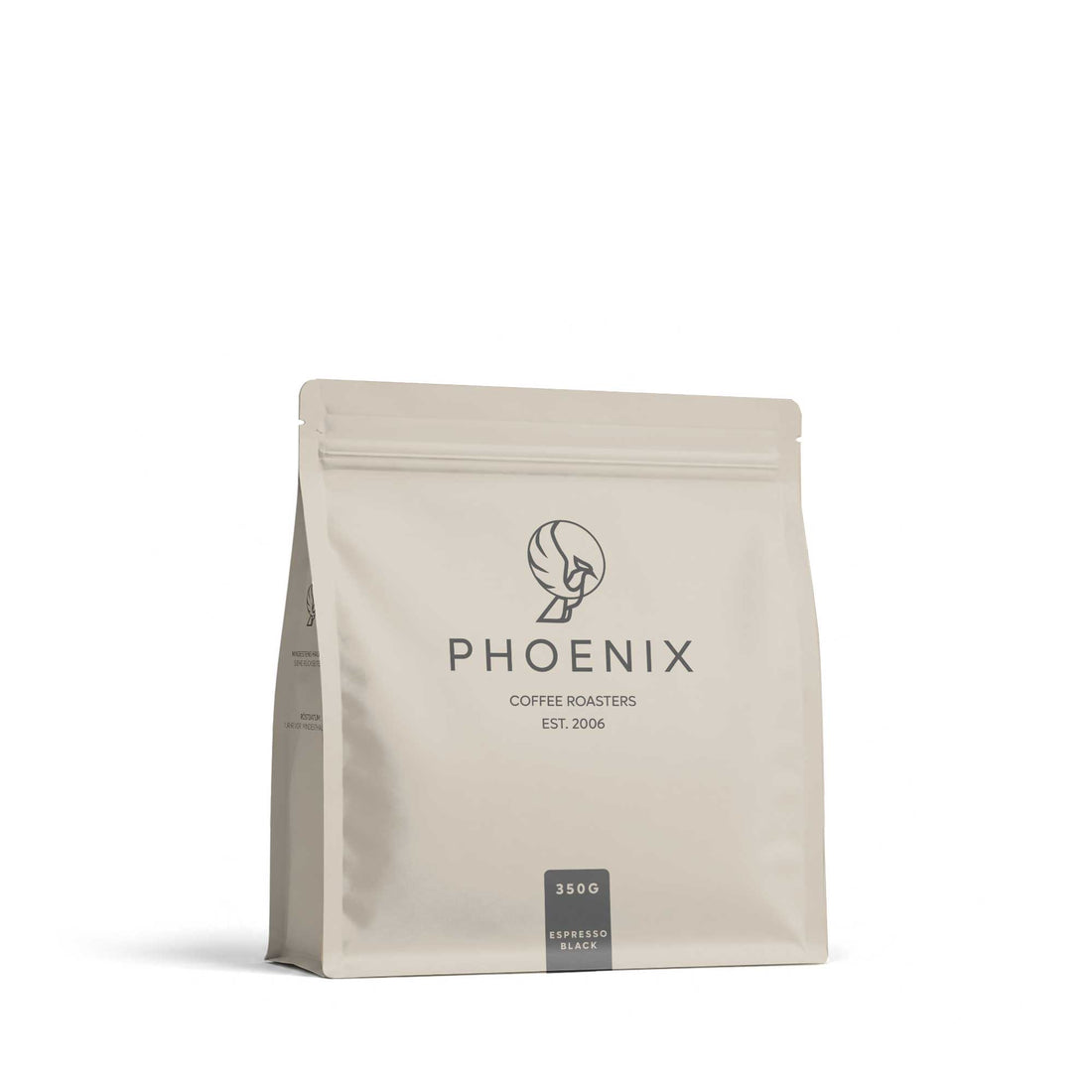
Espresso BLACK: Why this coffee suits the cup profile
Espresso BLACK is designed for a strong, full-bodied, and accessible profile. That's exactly why it fits well if you are looking for a chocolatey espresso with a nutty character. The roast aims for body, crema, and low acidity, without relying solely on bitterness.
For many households, this is particularly practical: a coffee should work in the portafilter, but also taste stable in the super-automatic machine. Our Espresso BLACK is suitable for pure espresso, Americano, and milk-based drinks like cappuccino or flat white. In milk, chocolate, nut, and caramel often become even more pronounced.
Who Espresso BLACK is particularly suitable for
Our Espresso BLACK is a good choice for anyone looking for a classic, round espresso experience: low acidity, strong body, clear roast aromas, and a familiar taste profile. It suits beginners who don't want to struggle with sharp acidity, and experienced home baristas who are looking for a reliable everyday espresso.
If you want to compare several espressos, it's also worth taking a look at our other espresso roast as well as our fruity omniroasts - discover espressos.
Common mistakes: Why espresso tastes sour, bitter, or flat
A sour-tasting espresso is often underextracted. Causes include too coarse a grind, too short an extraction time, too low a temperature, or too light a roast. Grinding finer, extracting a bit longer, or using a medium-darker roast often helps immediately.
Bitterness, on the other hand, often arises from over-extraction, too high a temperature, too long an extraction time, or very dark beans. Old coffee grounds and dirty brew groups can also intensify bitterness.
Flat espresso often has to do with lack of freshness, incorrect storage, or too low a dosage. Store beans airtight, cool, and dry, grind fresh, and work with consistent recipes. This way, you'll find out faster whether the problem lies with the bean, grinder, or machine.
_____
As a next step, a small brewing log is worthwhile: Note down the bean, dose, grind size, beverage volume, time, and taste. After just a few extractions, you'll recognize patterns and get significantly closer to a round, chocolatey-nutty espresso.